
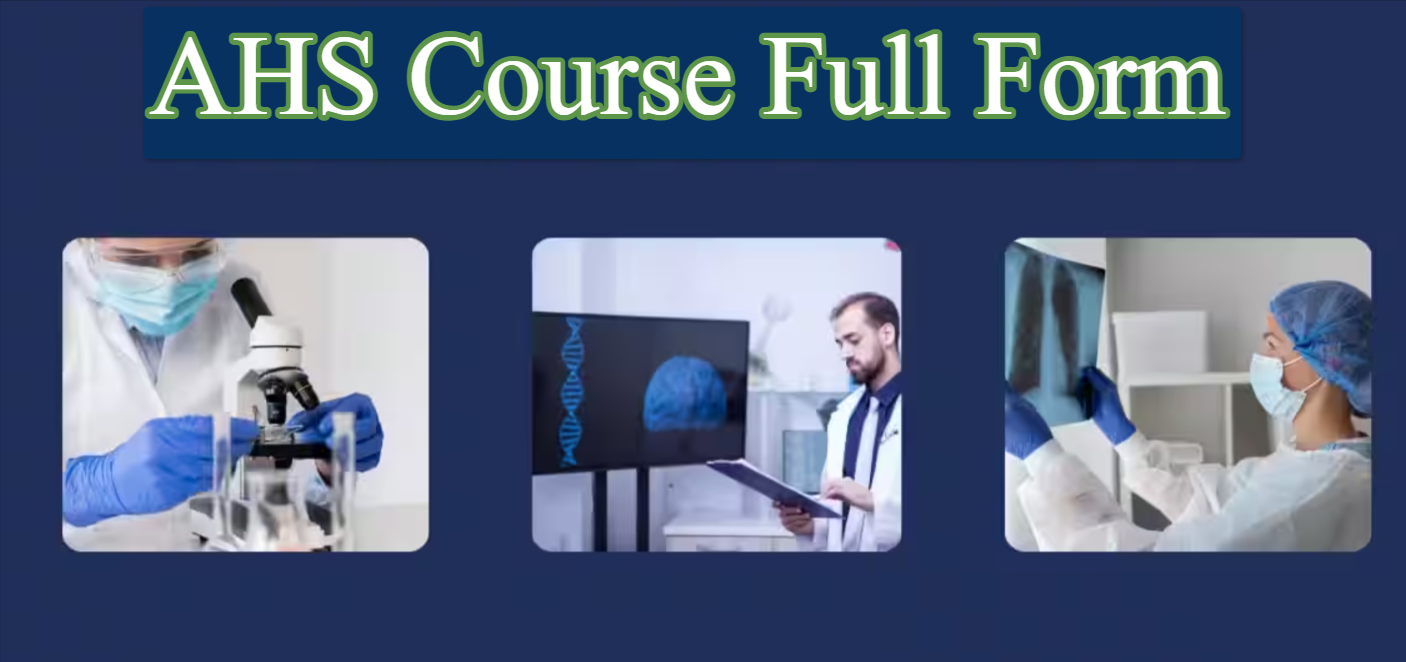
AHS Course Full Form is Allied Health Sciences. The field covers a broad variety of healthcare professionals that offer diagnostic, therapeutic and preventive services that are integral to the operation in the health system.
Course Structure and Duration
Allied Health Sciences programs are typically offered at the postgraduate and undergraduate levels. The undergraduate programs include those that offer the Bachelor of Science (B.Sc.) within Allied Health Sciences, usually last between three and four years, based on the institution and specialization. For example the B.Sc. with a concentration in Medical Laboratory Technology is a three-year course split in six semesters.
Postgraduate courses typically require two more years of study. The focus is on research and advanced knowledge in particular areas.
Eligibility Criteria
Admission to undergraduate AHS programs generally requires applicants must have successfully completed high school secondary school education (10+2) that has a particular focus on subjects in science, such as Physics, Chemistry, and Biology with an approved board. The requirements for admission may differ based on the school and specialty. For postgraduate programs that require a bachelor’s or master’s degree in an area of study is typically required.
Subjects and Curriculum
The curriculum for Allied Health Sciences is designed to give students both the theoretical background as well as practical skills that are relevant to the specific area of study. Common subjects that are found in all AHS programs are:
- Anatomies and Physiology understanding the anatomy and functions in the body of a human.
- Pathology: Study of disease mechanisms and their effects.
- Microbiology Examining microorganisms, and the role in the field of health and diseases.
- biochemistry Processes that are chemically involved within or in relation with living creatures.
- Particularized Instruction: Hands-on experience in certain areas, such as radiology, medical laboratory technology or optometry.
The courses typically contain clinical rotations or internships to give students real-world experience.
Career Opportunities
The graduates of Allied Health Sciences programs have many career possibilities within the healthcare industry. The roles that are possible include:
- Medical Laboratory Technologist: Conducting lab tests to aid in the diagnosis of disease.
- Technician in Radiology: Conducting imaging processes such as X-rays and MRIs.
- Optometrist Offering eye health services such as eye tests and prescribing correctional lenses.
- Respiratory Therapist Assistance to patients suffering breathing problems.
- Nutritionist/Dietitian: Advising on diet and nutrition for health maintenance and disease prevention.
The need for health professionals who are allied is rising, providing opportunities in clinics, hospitals, research institutions, as well as educational institutions.
Conclusion
Allied Health Sciences (AHS) courses offer comprehensive training and education in a variety of health-related disciplines, including traditional nursing and medicine. The curriculum integrates knowledge and practice they prepare students to play a crucial role in the healthcare system and contribute substantially to the patient’s care and medical services.